Crane Creek Farm is a small, woman-run farm located on the outskirts of Kansas City. I (Lauren) primarily run the farm, but my parents frequently help out, particularly with the goats and putting up hay for the year.
Founded in 2020, the original intent was to have a large market garden with beef on the side. The dream was to provide nutrient dense food hyperlocally to friends and family, via vegetable boxes and the opportunity to add-on beef products. The first Dexter cows were brought on the land in 2020 and the garden thrived, but the pandemic put a pause on the business plan.
The goal has always been to respect land and animal. That will never change.
While the goal is to make money, it is never the primary goal. I want to be able to know each animal individually and how to work with them based on their specific needs. I want to find the balance between modern technology and pre-industrial techniques to do what is best for the land and animals that live on it.
An off-farm job is a necessity for many reasons, but as my career has evolved, so has the dream for the farm.
Beginning in 2026, the primary focus is on Dexter cattle, Nigerian Dwarf goats, and natural dye plants.
Natural Dye Plants
I love quilting, I love linen, I love watching things grow, and I love projects. Natural dying is a special interest and one I hope to delve more into. I hope to have a small amount of indigo and marigold to sell in 2026, with madder, weld, black hollyhock, and more to come in future years.
Small Batch Artisan Hay
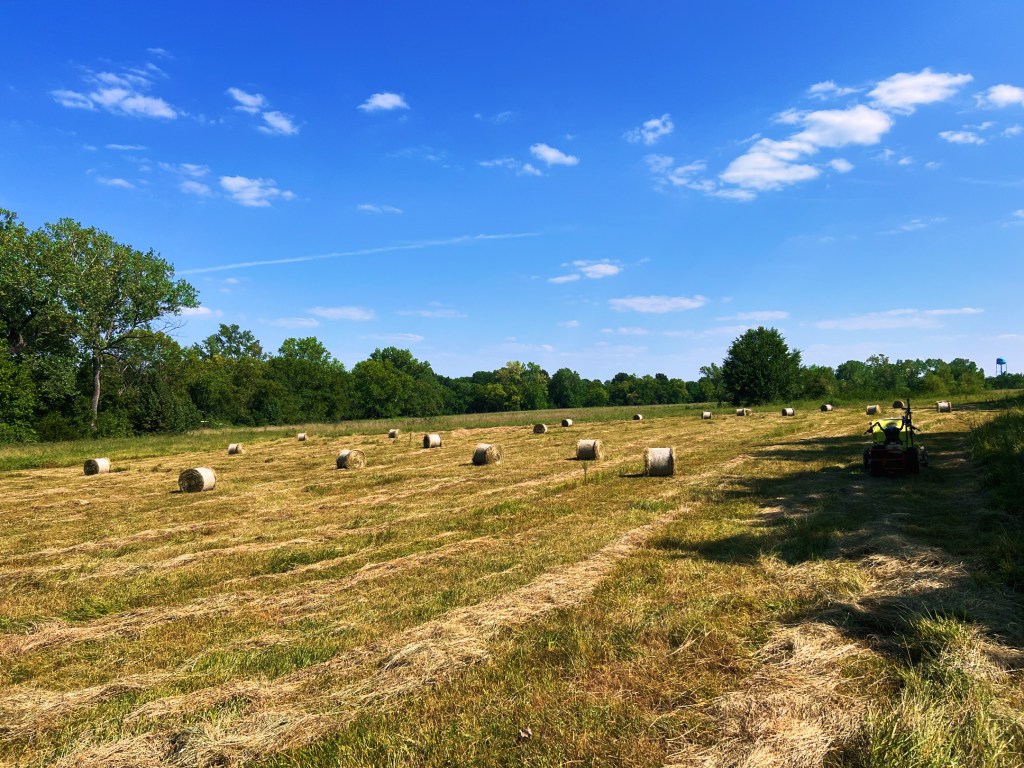
I make (most) of our own hay onsite, using a walk-behind tractor. It is a labor intensive project, one that feels particularly foolish when it’s 107 degrees, but it allows me more control over when the hay is cut. In years past, hay making has been outsourced, which means the hay is baled whenever it fits in a schedule. By cutting, raking, and baling hay on my own, I can cut the hay when it is at the healthiest for the livestock, as well as avoid any patches that may have invasive weeds I’m trying to limit the spread of.
In 2025, I very nearly met the goal. A stray thunderstorm ruined a batch of hay and I had to start feeding hay a month earlier than usual, so early in the season I brought in 50 hay bales for insurance. In the end, we likely had enough hay (or close to it) for the year, but the peace of mind the insurance bales brought in December were well worth the expenditure.
Alfalfa hay for the dairy goats is purchased at a local feedstore. I simply do not have the implements (or time/ interest) to establish an alfalfa hay field onsite.
All hay made onsite is free of herbicides, pesticides, and if outside fertilizer has been brought in, it is organically certified.
Grazing
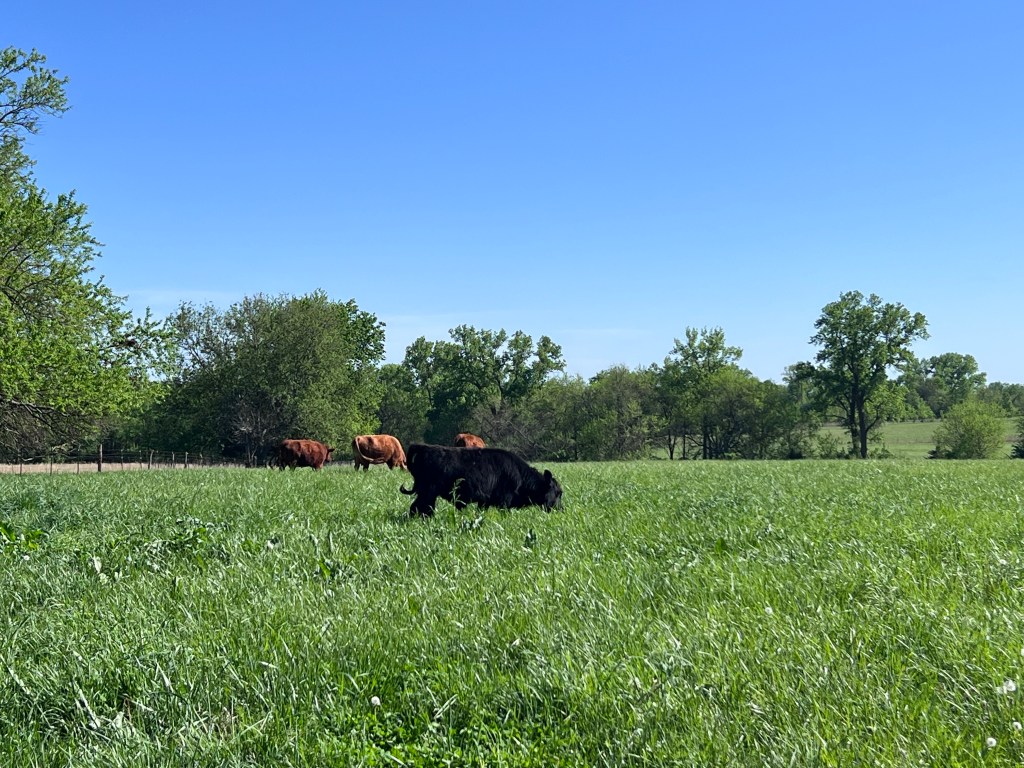
The ultimate goal is rotational grazing. The majority of the land is open pasture, which limits shade opportunities as the herd moves around. During the hot summer months, priority is given to areas where the animals can get shade. I am working on a plan to incorporate shade trees on a broader basis.

